STRUKTURA platform.
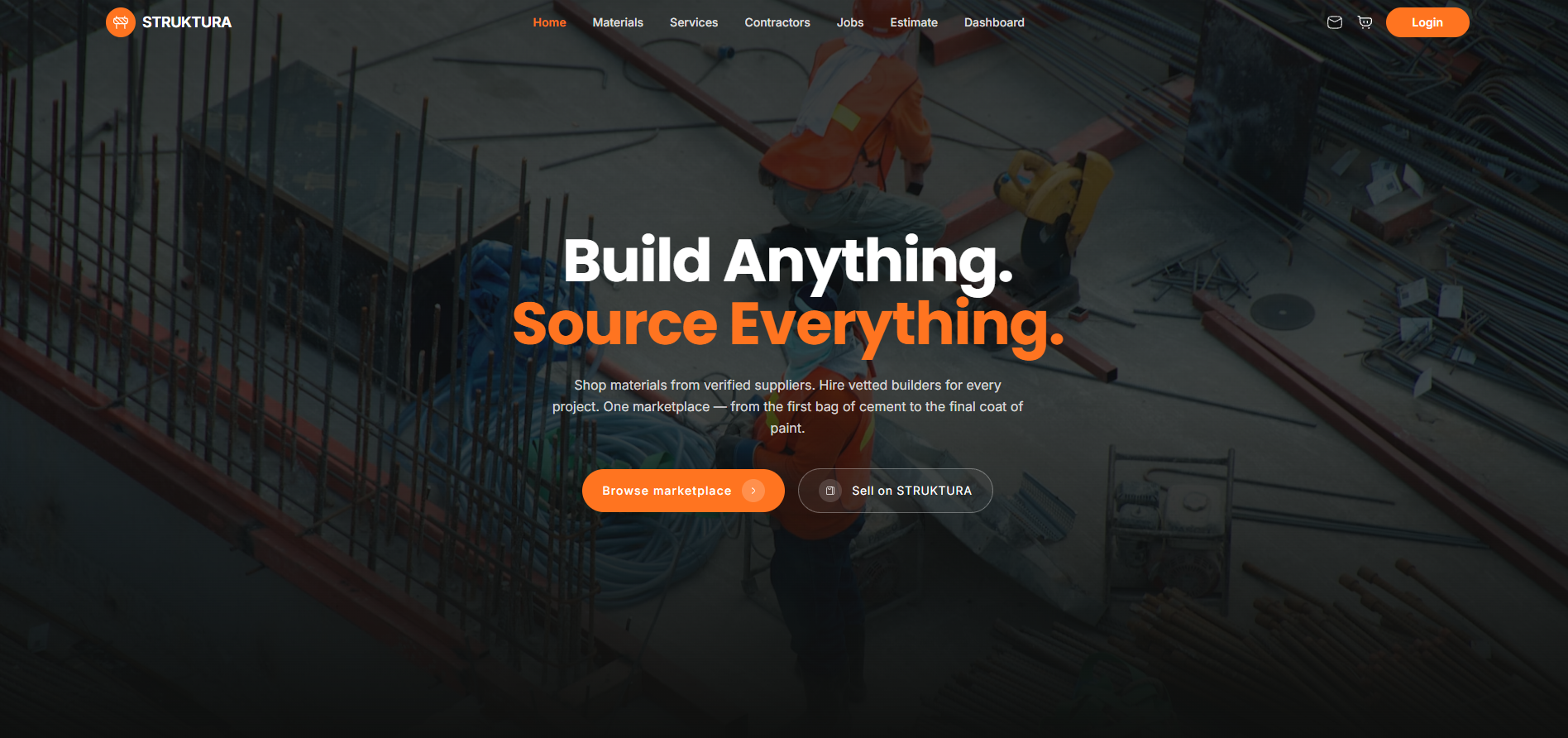
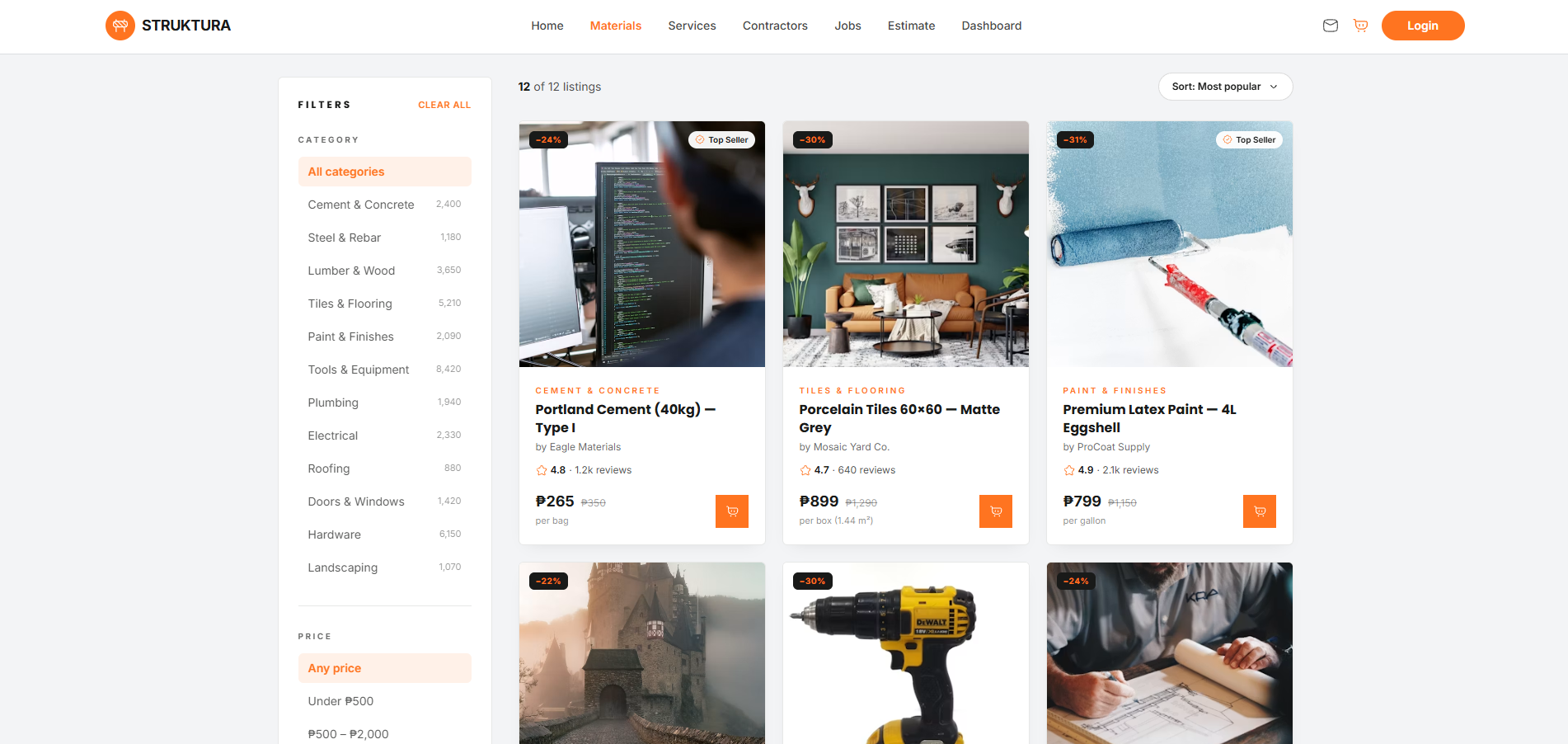
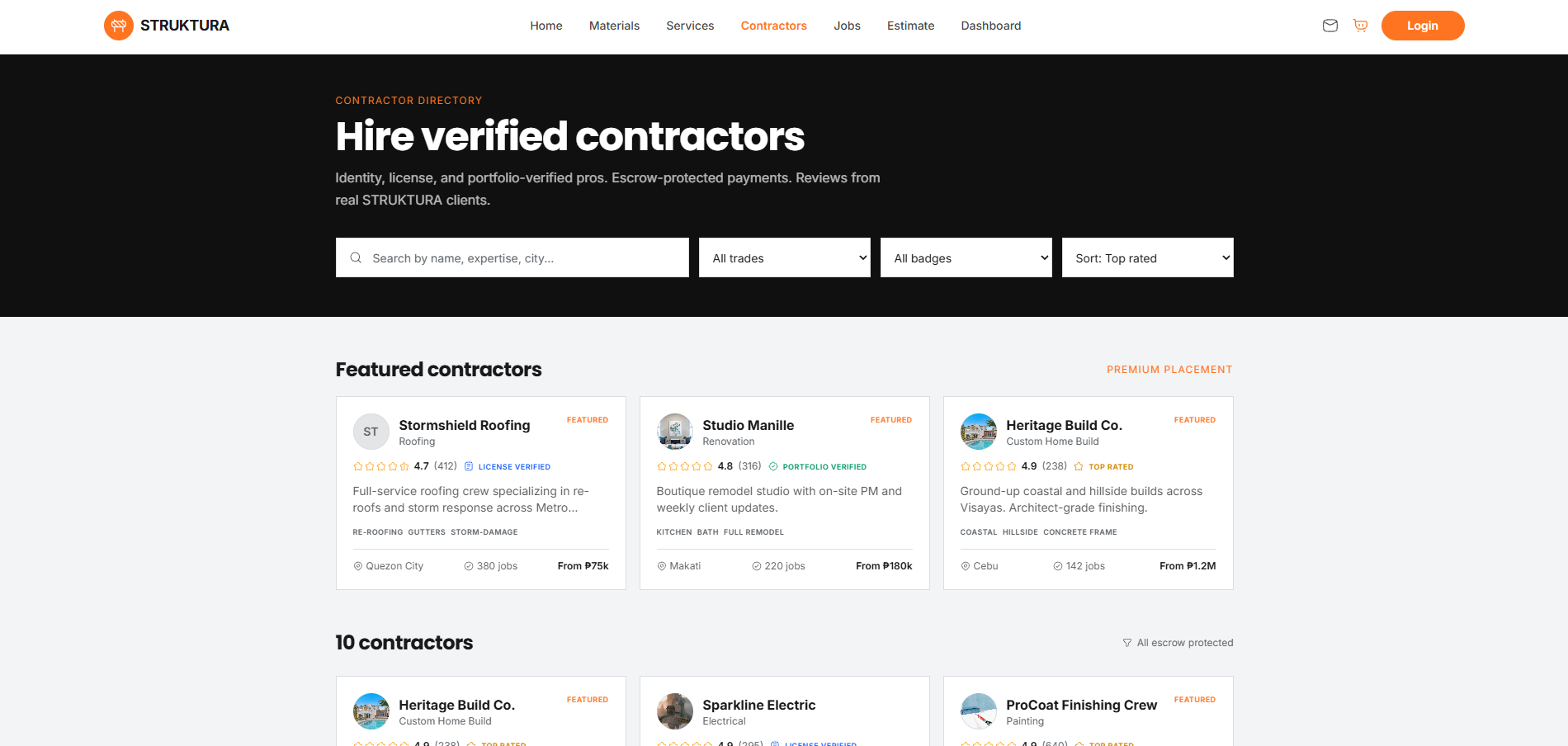
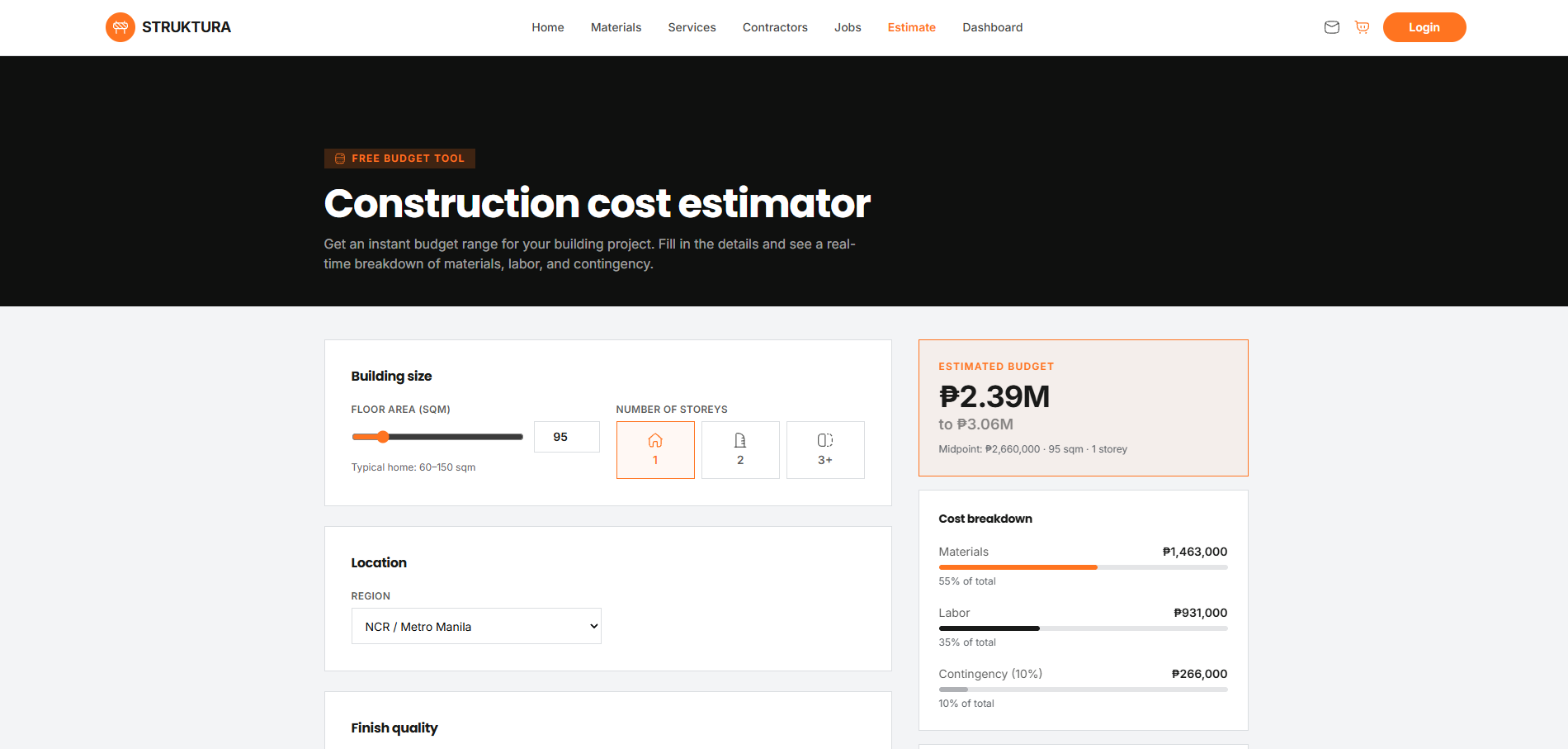
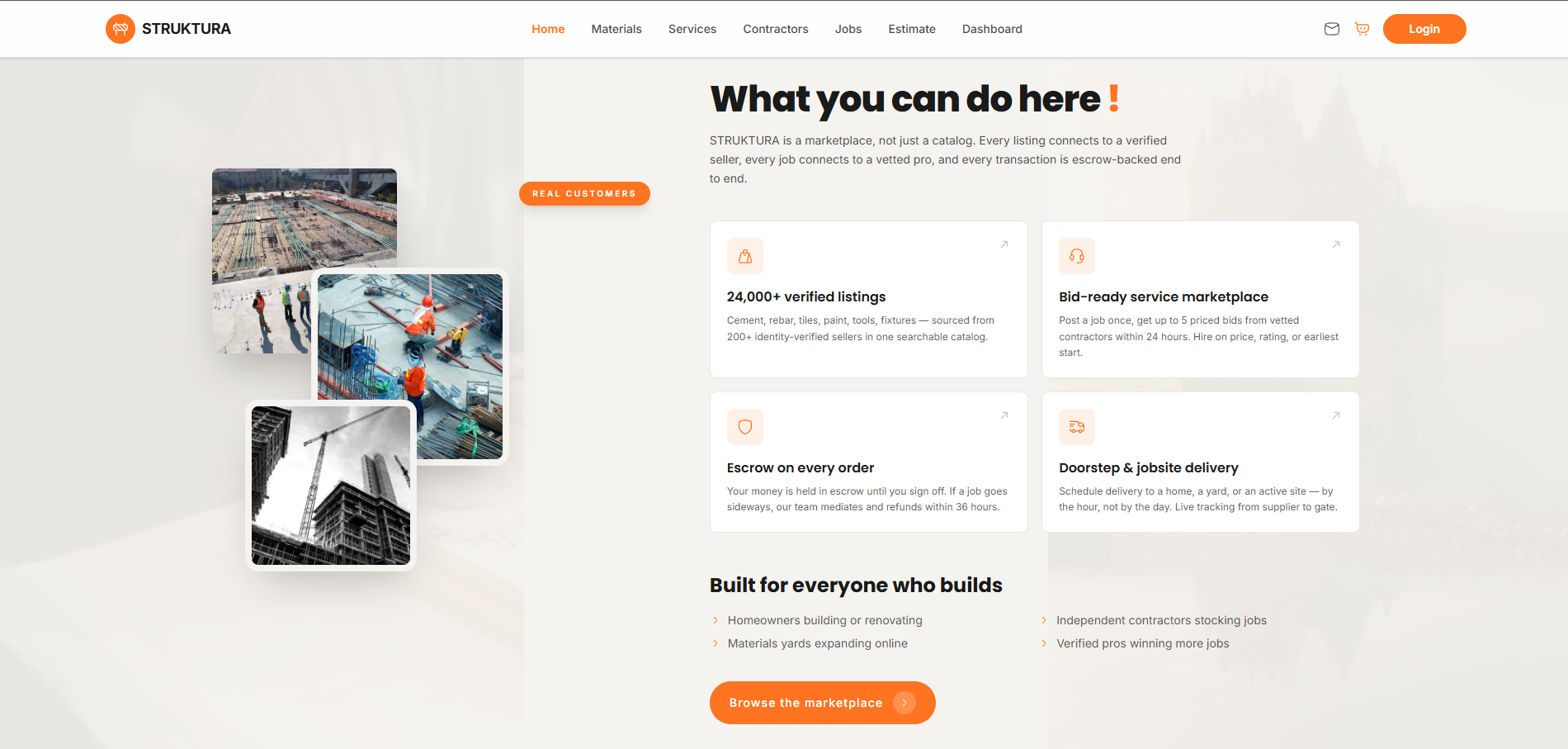
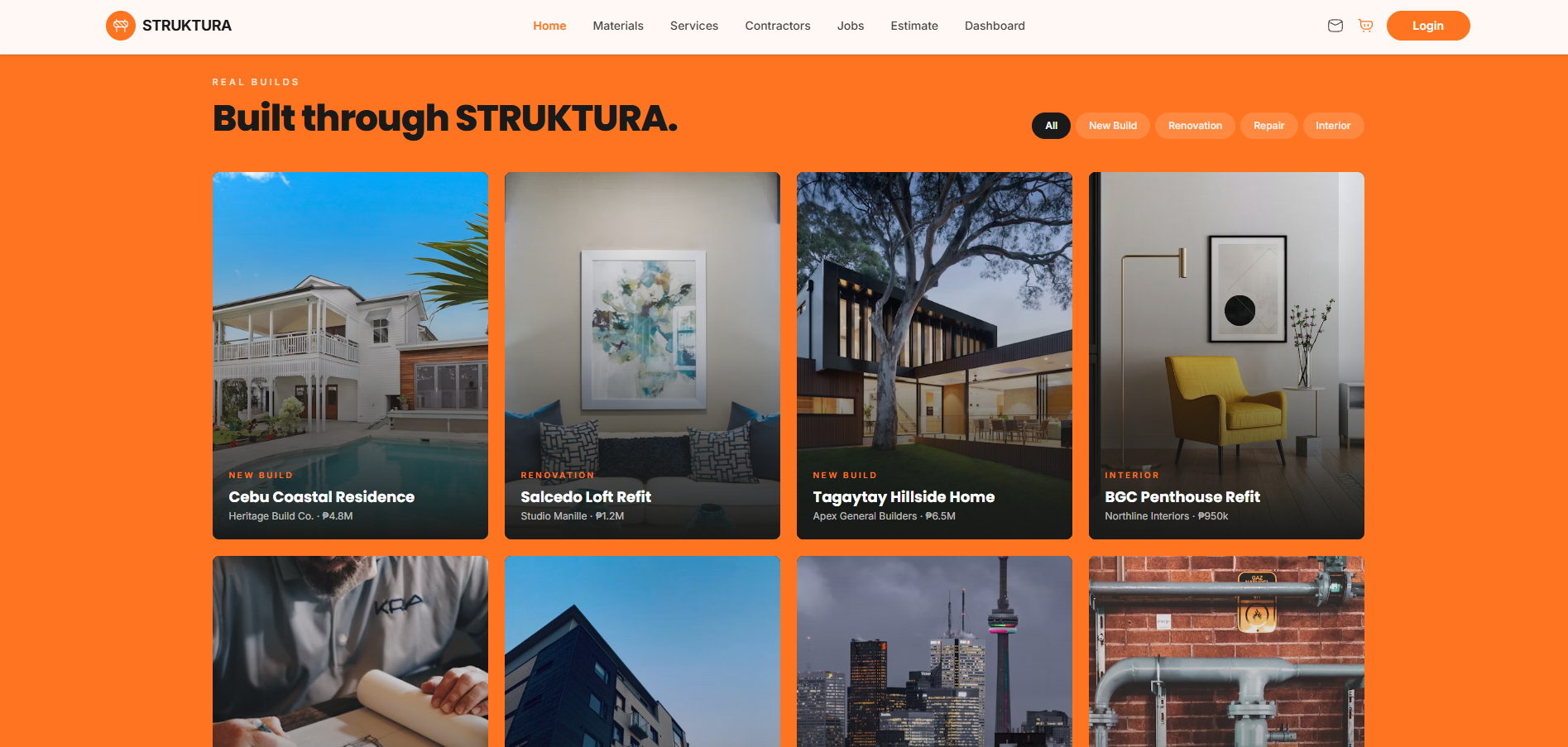
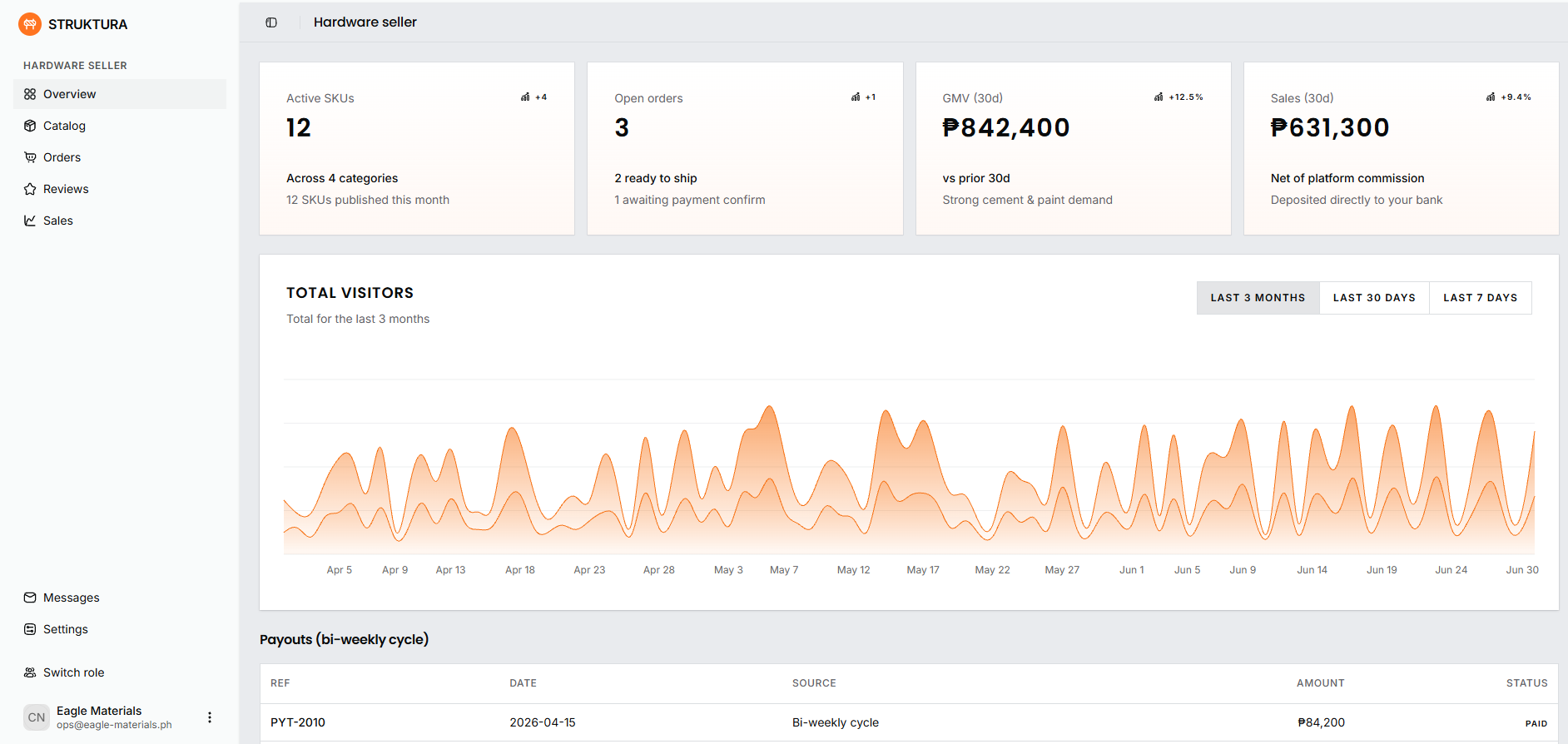
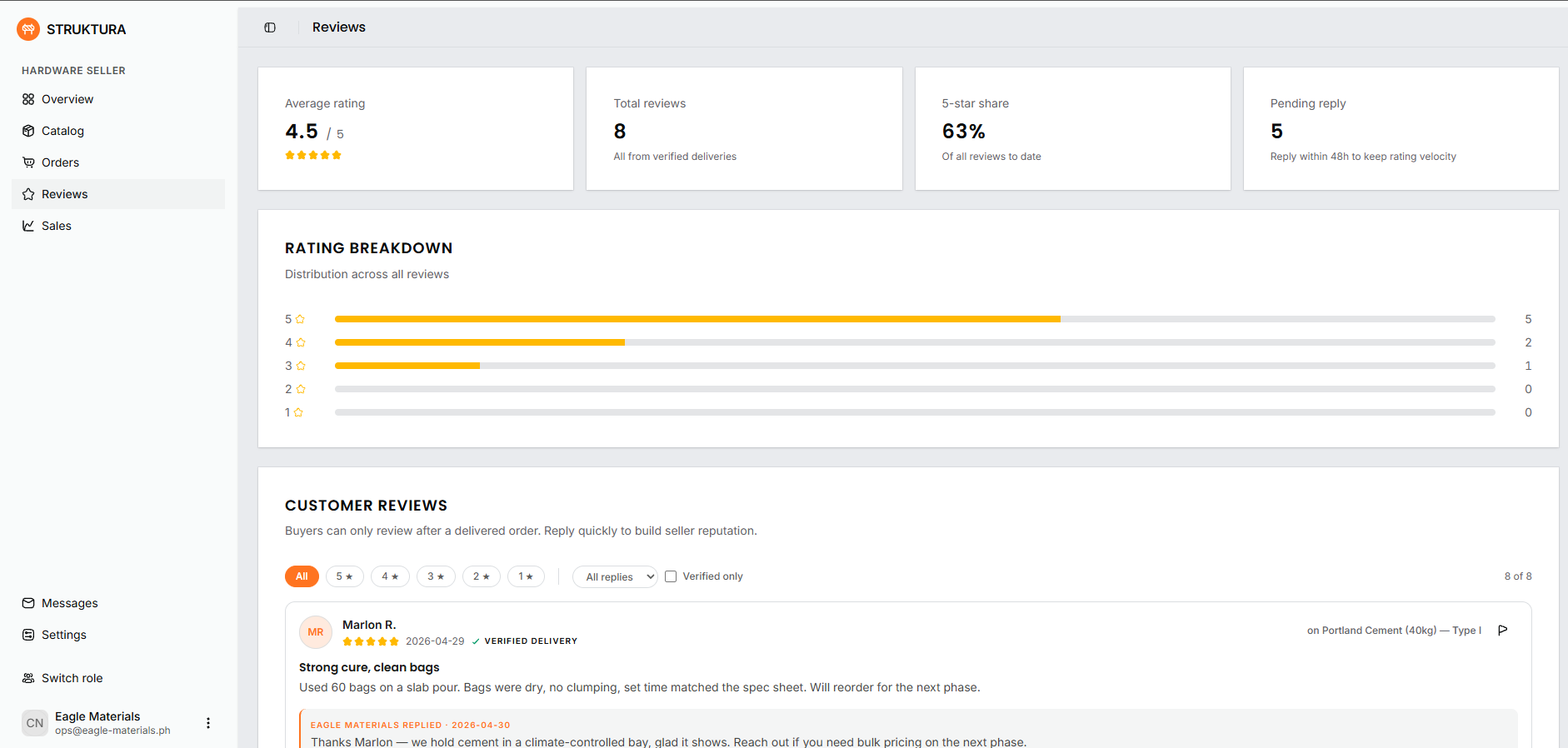
A large-scale, escrow-backed marketplace for the Philippine construction industry — buyers, sellers, service companies and contractors in one trusted platform. In active development; I co-architected the system.
01The problem
The Philippine construction market is fragmented and low on trust. Buyers and contractors struggle to find and vet each other, and large sums changing hands between strangers carry real risk. STRUKTURA is designed to be the trusted place that unifies the market, earns only when a deal closes, and puts secure payments into the foundation rather than treating them as an afterthought.
02My role
I worked as a full-stack developer and helped architect the overall system design — both shaping how the platform fits together and building across the stack, from the React frontend through to the backend design.

03Architecture
Traffic from web and mobile clients hits Cloudflare first (TLS, WAF, DDoS) before reaching the NestJS API — the only public entry point, built as a modular monolith rather than splitting into microservices too early.
Inside that monolith, each service/module owns its own Clean Architecture setup — its own domain, application, and infrastructure layers — so the modules stay independently reasoned and testable, and any one could later be lifted out into its own service without untangling shared internals. Behind it: Postgres (via Prisma) for transactional data, Redis for caching and queues, and Supabase for auth and file storage. Anything slow or external is pushed off the request path into a BullMQ worker tier in a separate process, keeping the API fast while heavy work happens asynchronously. Security and correctness are foundations, not additions.
A modular monolith over premature microservices — knowing what to build now versus later.
04What it demonstrates
System design at scale for a genuinely complex, multi-sided marketplace with payments and trust at its centre — senior-level work. Full-stack range across a substantial React frontend, a NestJS backend design, a relational data layer, background processing and the platform infrastructure that ties it together.